Published by H&A Immigration Law Offices LLP
Racine, Wisconsin
Introduction
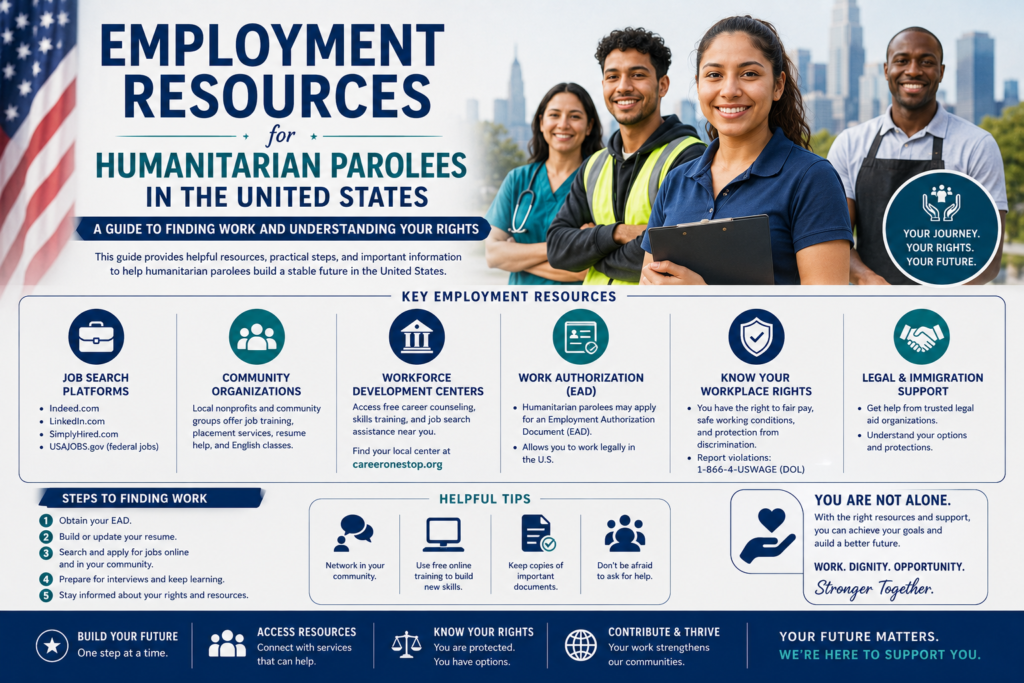
Many individuals who enter the United States through humanitarian parole programs are eager to begin rebuilding their lives and supporting their families. One of the first questions parolees often ask is, “Can I work in the United States?”
The answer depends on your parole category and employment authorization status. Many parolees may become eligible to work after receiving authorization from U.S. Citizenship and Immigration Services (USCIS), while certain Afghan and Ukrainian parolees may already be authorized to work incident to their parole.
This guide explains employment authorization, job search resources, employee rights, and tools available to parolees seeking employment in the United States.
Can Parolees Work in the United States?
In most cases, parolees must obtain employment authorization before accepting employment.
Many parolees become authorized to work after:
- Filing Form I-765, Application for Employment Authorization
- Receiving approval from USCIS
- Obtaining an Employment Authorization Document (EAD), commonly known as a work permit
Once an EAD is issued, the individual may generally work legally in the United States.
Special Rules for Certain Afghan and Ukrainian Parolees
Some Afghan and Ukrainian parolees may be employment authorized automatically as part of their parole status.
These individuals may be able to demonstrate employment authorization through specific immigration documents recognized under federal employment verification rules.
Individuals should carefully review their admission documents and consult with an immigration professional if they are unsure of their eligibility.
Government Resources to Help You Find a Job
The U.S. Department of Labor provides several free resources designed to help job seekers find employment and build career skills.
CareerOneStop
CareerOneStop offers:
- Job search tools
- Career planning resources
- Training opportunities
- Resume assistance
- Salary information
American Job Centers
American Job Centers provide free services including:
- Job placement assistance
- Career counseling
- Skills assessments
- Workforce training programs
- Resume preparation
- Interview coaching
Many centers offer in-person and virtual assistance.
O*NET Online
O*NET Online allows job seekers to:
- Explore hundreds of occupations
- Learn required skills
- Research job responsibilities
- Identify educational requirements
- Discover career pathways
Searching for Jobs in Your State
Most states maintain online job banks where employers post available positions.
Job seekers can search opportunities based on:
- Location
- Industry
- Experience level
- Salary range
- Full-time or part-time status
Additionally, national job search platforms allow individuals to locate opportunities across the United States.
How to Build a Strong Resume
A professional resume can improve your chances of securing interviews.
A resume should include:
- Contact information
- Work history
- Education
- Certifications
- Language skills
- Technical abilities
- Volunteer experience
Even if you gained work experience outside the United States, it may still be valuable to employers.
Learn About Different Careers
Before applying for jobs, it is helpful to understand available career options.
The Occupational Outlook Handbook provides information about:
- Average salaries
- Job growth projections
- Educational requirements
- Daily job duties
- Career advancement opportunities
Researching careers can help individuals choose positions that align with their skills and long-term goals.
Protect Yourself from Job Scams
Unfortunately, scammers often target immigrants and newcomers seeking employment.
Warning signs of employment scams include:
- Requests for upfront payments
- Promises of guaranteed jobs
- Requests for personal banking information before hiring
- Offers that seem too good to be true
- Employers refusing to provide written information
If you suspect fraud, you may report the scam to the Federal Trade Commission (FTC).
Know Your Rights as an Employee
Federal law protects workers from discrimination and unlawful treatment in the workplace.
Employers generally may not discriminate based on:
- Race
- Color
- Religion
- National origin
- Sex
- Pregnancy
- Disability
- Age
- Genetic information
Workers may have legal protections regardless of immigration background in many workplace situations.
Immigration-Related Employment Protections
The U.S. Department of Justice investigates certain immigration-related employment discrimination issues.
Examples may include:
- Citizenship status discrimination
- Unfair document requests during hiring
- Retaliation for asserting workplace rights
Understanding these protections helps workers avoid exploitation.
Safe and Healthy Working Conditions
The Occupational Safety and Health Administration (OSHA) works to ensure safe working environments.
Employees have the right to:
- Receive workplace safety information
- Report unsafe conditions
- Request workplace inspections
- Work in environments free from serious safety hazards
Employers must comply with federal workplace safety standards.
Why Employment Authorization Matters
Working without proper authorization can create serious immigration consequences.
Before accepting employment, parolees should ensure they:
- Have valid employment authorization
- Maintain current immigration documentation
- Renew work authorization when necessary
- Keep copies of important immigration records
Obtaining proper authorization protects both workers and employers.
How H&A Immigration Law Offices LLP Can Help
Our office assists humanitarian parolees and other immigrants with:
- Employment Authorization Applications (Form I-765)
- Humanitarian Parole Matters
- Adjustment of Status Applications
- Family-Based Immigration
- Asylum Applications
- Temporary Protected Status (TPS)
- Immigration Compliance Questions
If you have questions about your eligibility to work in the United States or need assistance obtaining employment authorization, contact H&A Immigration Law Offices LLP.
H&A Immigration Law Offices LLP
3018 Rapids Dr Suite A
Racine, WI 53404
Phone: (414) 982-3863
Disclaimer
This article is for informational purposes only and does not constitute legal advice. Immigration laws and employment authorization rules may change. Consult with a qualified immigration attorney regarding your individual situation.