
Published by H&A Immigration Law Offices LLP
Racine, Wisconsin
Introduction
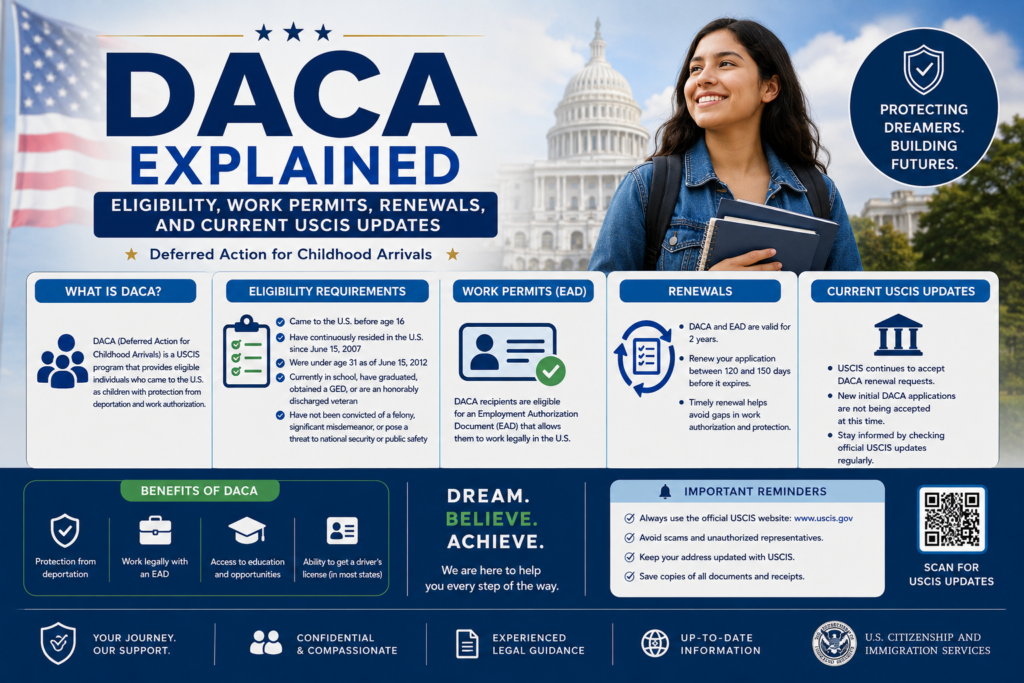
Deferred Action for Childhood Arrivals (DACA) is a program that provides temporary protection from deportation and work authorization to certain individuals who came to the United States as children.
Since its creation in 2012, DACA has helped hundreds of thousands of immigrants pursue education, employment, and stability in the United States. However, DACA does not provide lawful immigration status or a direct path to permanent residency.
This guide explains who may qualify for DACA, current legal limitations, filing requirements, and important considerations for applicants and recipients.
What Is DACA?
DACA (Deferred Action for Childhood Arrivals) is an exercise of prosecutorial discretion by the Department of Homeland Security (DHS).
If granted, DACA provides:
- Protection from deportation for a temporary period
- Employment authorization (work permit)
- Social Security Number eligibility
- Ability to renew protection if eligibility continues
DACA does not provide:
- Lawful immigration status
- Permanent residence (Green Card)
- U.S. citizenship
Current Status of DACA
Due to ongoing federal court litigation, USCIS is currently restricted from approving new initial DACA applications.
While USCIS continues to accept and process initial DACA requests, the agency is generally prohibited from granting first-time DACA benefits and related employment authorization at this time.
Current DACA recipients may continue filing eligible renewal requests.
Who May Qualify for DACA?
An individual may qualify if they meet all of the following requirements:
Age Requirement
You must have been:
- Under 31 years old on June 15, 2012
- Born on or after June 16, 1981
Arrival in the United States
You must have entered the United States before your 16th birthday.
Continuous Residence
You must have continuously resided in the United States since June 15, 2007.
Physical Presence
You must have been physically present in the United States:
- On June 15, 2012
- At the time of filing
Immigration Status
You must have had no lawful immigration status on June 15, 2012.
Education or Military Service
You must currently be:
- Enrolled in school; or
- A high school graduate; or
- A GED holder; or
- An honorably discharged veteran of the U.S. Armed Forces or Coast Guard.
Criminal Background
You may not qualify if you have:
- A felony conviction
- A significant misdemeanor conviction
- Three or more non-significant misdemeanors
- Security or public safety concerns
What Documents Are Required?
Applicants must provide evidence supporting eligibility.
Common documents include:
Identity Documents
- Passport
- National ID card
- Birth certificate with photo identification
- School ID
Proof of Entry Before Age 16
- School records
- Medical records
- Travel records
- Immigration documents
- Employment records
Proof of Continuous Residence
- Utility bills
- School records
- Tax documents
- Lease agreements
- Bank statements
- Insurance records
Education Records
- High school diploma
- GED certificate
- School transcripts
- Current enrollment records
Forms Required for DACA
Applicants generally submit:
Form I-821D
Consideration of Deferred Action for Childhood Arrivals
Form I-765
Application for Employment Authorization
Form I-765WS
Worksheet supporting employment authorization eligibility
All forms must be properly completed, signed, and accompanied by supporting evidence.
Biometrics Appointment
After filing, USCIS typically schedules applicants for biometrics collection.
Applicants may be required to provide:
- Fingerprints
- Photograph
- Signature
Failure to attend a biometrics appointment may result in denial of the request.
USCIS Online Account Benefits
Applicants may create a USCIS online account to:
- Track case status
- Receive updates
- View notices
- Update contact information
Maintaining current address information with USCIS is extremely important.
Can DACA Recipients Work?
Yes.
If DACA and employment authorization are approved, USCIS issues an Employment Authorization Document (EAD), commonly known as a work permit.
Recipients may also become eligible to obtain:
- Social Security Numbers
- Driver’s licenses (subject to state law)
- Employment opportunities
Travel Outside the United States
Travel can have serious immigration consequences for DACA recipients.
In general:
- Unauthorized travel may negatively impact DACA benefits.
- Advance Parole approval may be required before international travel.
- Traveling without proper authorization may create reentry difficulties.
Applicants should seek legal advice before making travel plans.
Criminal Issues and DACA Eligibility
Certain criminal convictions may prevent eligibility.
Disqualifying Crimes May Include:
- Felonies
- Domestic violence offenses
- Burglary
- Drug trafficking
- Firearm offenses
- Driving under the influence (DUI)
- Sexual abuse offenses
Even minor criminal issues should be reviewed carefully before filing.
What Happens if USCIS Denies DACA?
In most cases:
- There is no administrative appeal process.
- Motions to reopen are generally unavailable.
- Certain administrative errors may be reviewed through USCIS service request procedures.
However, a denial does not automatically result in removal proceedings in most situations unless fraud, public safety concerns, or national security concerns are involved.
Protect Yourself from Immigration Scams
Unfortunately, scammers often target immigrants seeking DACA benefits.
Always remember:
- USCIS forms are available free of charge.
- No one can guarantee DACA approval.
- Beware of individuals claiming special connections with immigration authorities.
- Work only with qualified immigration attorneys or accredited representatives.
How H&A Immigration Law Offices LLP Can Help
Our office assists clients with:
- DACA Eligibility Reviews
- DACA Renewals
- Employment Authorization Applications
- Advance Parole Guidance
- Family-Based Immigration
- Adjustment of Status
- Humanitarian Immigration Relief
- Removal Defense
If you have questions regarding DACA eligibility, renewals, travel authorization, or long-term immigration options, contact H&A Immigration Law Offices LLP for a case evaluation.
H&A Immigration Law Offices LLP
3018 Rapids Dr Suite A
Racine, WI 53404
Phone: (414) 982-3863
Disclaimer
This article is for informational purposes only and does not constitute legal advice. Immigration laws and court rulings may change. Consult with a qualified immigration attorney regarding your specific circumstances.